
Introduction to the Rainy Season Safari in Tanzania
A Rainy Season Safari in Tanzania is often avoided by many travelers who assume that wildlife sightings will be reduced during wetter months. However, a completely different safari experience is usually created when the rainy season arrives across the famous national parks of Tanzania.
During this time, landscapes are transformed into lush green plains, rivers are filled again, and the entire ecosystem is refreshed beautifully. Because of this transformation, a Rainy Season Safari in Tanzania is increasingly being recommended by experienced safari guides and wildlife photographers.
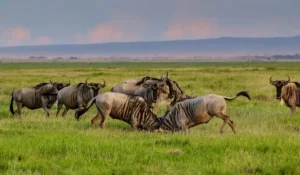
Crowds that are normally seen during the dry season are significantly reduced, which allows a quieter and more personal connection with nature. Therefore, peaceful wildlife sightings can be enjoyed while vehicles from other groups are rarely encountered during many game drives.
For travelers seeking something unique and authentic, the Rainy Season Safari in Tanzania is often described as the hidden gem of African travel experiences.
Green Landscapes Are Revealed During a Rainy Season Safari in Tanzania
One of the most remarkable advantages of a Rainy Season Safari in Tanzania is the dramatic transformation of the landscape. Dry dusty plains that dominate during the dry months are replaced by endless stretches of green grass and blooming plants.
Because fresh vegetation is produced after rainfall, herbivores such as zebras, wildebeests, and antelopes are naturally drawn toward these nourishing feeding areas. As a result, wildlife movements can still be observed clearly throughout many national parks across Tanzania.
Photographers especially benefit from these lush environments because vibrant colors are naturally created by the combination of green vegetation, wildlife, and soft light. For this reason, the Rainy Season Safari in Tanzania is frequently chosen by professional photographers searching for unique wildlife images.
Baby Animals Are Commonly Seen During a Rainy Season Safari in Tanzania
Another unforgettable highlight of a Rainy Season Safari in Tanzania is the arrival of newborn animals across the savannah. Because food becomes abundant during this time, many species give birth during the rainy months.
Young wildebeests, gazelles, and zebras are often seen taking their first steps while learning to survive within the wild environment. This creates heartwarming moments that are rarely experienced during other times of the year.
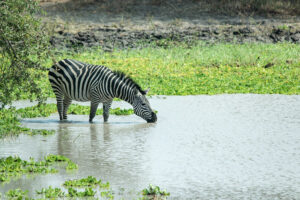
However, the presence of young animals also attracts predators that rely on opportunity and instinct to survive. Therefore, dramatic wildlife interactions can sometimes be witnessed during a Rainy Season Safari in Tanzania.
For many safari lovers, these moments are remembered as the most emotional and powerful wildlife experiences ever observed.
Fewer Tourists Are Experienced During a Rainy Season Safari in Tanzania
One of the greatest benefits of a Rainy Season Safari in Tanzania is the peaceful atmosphere that is created across many national parks. Because the season is mistakenly avoided by many visitors, fewer safari vehicles are normally present during game drives.
As a result, wildlife sightings can often be enjoyed privately without large crowds gathering around animals. This quiet environment allows nature to be appreciated in a deeper and more meaningful way.
Guides are also able to spend more time explaining animal behavior and ecosystem dynamics because schedules are usually more flexible. For travelers who value tranquility and authenticity, the Rainy Season Safari in Tanzania becomes a truly special adventure.
Dramatic Skies Are Witnessed During a Rainy Season Safari in Tanzania
Another extraordinary feature of a Rainy Season Safari in Tanzania is the dramatic sky that develops during changing weather conditions. Large clouds, golden sunlight, and distant rain showers are often combined to create breathtaking scenery.
Sunrises and sunsets become especially magical because colorful reflections are produced across the clouds and open plains. Photographs taken during these moments are frequently described as some of the most beautiful safari images ever captured.
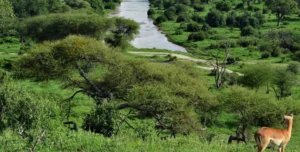
Because the air becomes clearer after rainfall, wildlife can also be observed against fresh and vibrant backgrounds. Therefore, a Rainy Season Safari in Tanzania offers visual experiences that are rarely matched during dry months.
Short Rain Showers Are Usually Experienced During a Rainy Season Safari in Tanzania
Many travelers imagine constant rain when the rainy season is mentioned, but this assumption is rarely accurate. Instead, rainfall is usually experienced in short refreshing showers that pass quickly across the landscape.
After these brief showers, sunshine is often returned and animals continue their normal activities across the savannah. Because the air becomes cooler and fresher, game drives are sometimes even more comfortable than during the dry season heat.
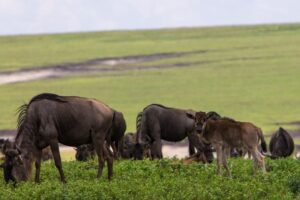
For this reason, the Rainy Season Safari in Tanzania should not be feared but rather appreciated as part of the natural rhythm of the African wilderness.
Conclusion About the Rainy Season Safari in Tanzania
A Rainy Season Safari in Tanzania may not always be considered by first time travelers, yet incredible advantages are quietly offered during this special season. Lush landscapes, newborn wildlife, dramatic skies, and peaceful parks are all experienced together.
Because fewer visitors are present, a deeper connection with nature can be created while authentic safari moments are enjoyed. Therefore, the Rainy Season Safari in Tanzania should be recognized as one of the most rewarding and underrated travel opportunities in Africa.
For travelers who desire beauty, tranquility, and unforgettable wildlife encounters, the Rainy Season Safari in Tanzania is truly a hidden treasure waiting to be discovered.